Tag Archives: history

Amy Caudill’s Reviews : Extinction

Extinction by Douglas Preston

Extinction by Douglas Preston (Goodreads Author)

Amy Caudill‘s review

A technological breakthrough runs amok in this new novel by author Douglas Preston. A group of scientists have “DE-extincted” several species of dinosaurs, aka Jurassic Park, and set them up in a nature preserve in the Colorado wilderness.


When a wealthy couple disappear deep in the wilderness of the preserve, the reader is left wondering momentarily if the culprits are animal or human, at least from the short early chapters I read before the book’s official release. However, after getting a copy of the entire book I was able to quickly realize the dinosaurs were innocent. Instead, a group of unknown size had somehow infiltrated the park, a group that had insider knowledge of the security, the routines, and the hidden old mining areas underneath the park.


As Colorado Bureau of Investigation Special Agent Frankie Cash and Sheriff Jim Colcord are forced to work together to find the missing couple, they quickly discover clues to far more sinister deeds. The kidnappers have left behind videos and evidence they wanted to have discovered-evidence of murder, cannibalism, and strange, primitive rites conducted under their noses. Who are the members of this group? How are they eluding the security of the park and the manhunt of combined forces of CBI and police investigators?


Forced to work under close scrutiny of the press, the administration of the park who are being evasive, the billionaire father of one of the victims who is outraged but also hiding information, as well as the CBI and the governor; Cash and Colcord are only left with more questions and very few answers. Finally they resort to underhanded means to get inside the laboratories where the dinosaurs are made. Once there, they discover that the scientists bred more than dinosaurs.


The group of scientists actually De-extincted one of humanities’ ancient rivals, a rival species driven into extinction by homo sapiens. The newly resurrected race escape the control of the scientists, and are out for revenge. Their goal- extinction of the human race.


I was shocked at the big twist in this book; I definitely did not predict the direction this story would take. That being said, I believe it was handled in a manner that was all too plausible. Preston has a history of writing stories where technology gets the better of its inventors and this is just the latest example of his writing style. What at first seems like a re-write of Jurasssic Park turned out to be so much more, and I award this novel 5 stars.

Interesting Myths and Facts about the Moon

This coming Saturday marks the fiftieth anniversary of the one of the most iconic events of the twentieth century- the lunar landing of the Apollo 11, where the American astronaut Neil Armstrong became the first person to walk on the surface of the moon.  This amazing feat was an incredible testament to human ingenuity, determination, and willingness to reach for seemingly impossible dreams.

astronaut standing beside american flag on the moon
Saturday, July 20, 2019, marks the 50th anniversary of the Apollo 11 moon landing.  Photo by Pixabay on Pexels.com

Long before this event, humans have been fascinated by our closest neighbor in the sky, and have used it as a source of inspiration and superstition.  Here are a few of the more interesting stories our ancestors have told to explain the existence of this celestial body:

  • Many cultures worshipped the moon as a goddess. The Greeks and Romans even had three separate goddesses to describe the phases of the moon; Artemis as the new moon, Selene as the full moon, and Hecate as the dark side of the moon.
  • The ancient Chinese explained lunar eclipses as being caused by an enormous dragon that swallowed the sun, and so they made as much noise as possible to scare the dragon away.
  • Multiple cultures have told stories about the “man in the moon.”   Most of these variations say that he was put there as punishment for stealing, some even for the attempted theft of the moon itself.
  • The moon’s phases have historically been linked with madness, and the word “lunatic” comes from this belief. Ancient philosophers such as Aristotle and Pliny the Elder believed that a full moon affected the water in a person’s brain, causing irrational behavior or insanity.
  • Our modern holiday Easter is actually calculated by the moon.  We celebrate on the first Sunday following the first Saturday after the first full moon after the spring equinox.  This tradition has its roots in archetypal symbols involving femininity, fertility, rebirth and the lunar cycle.

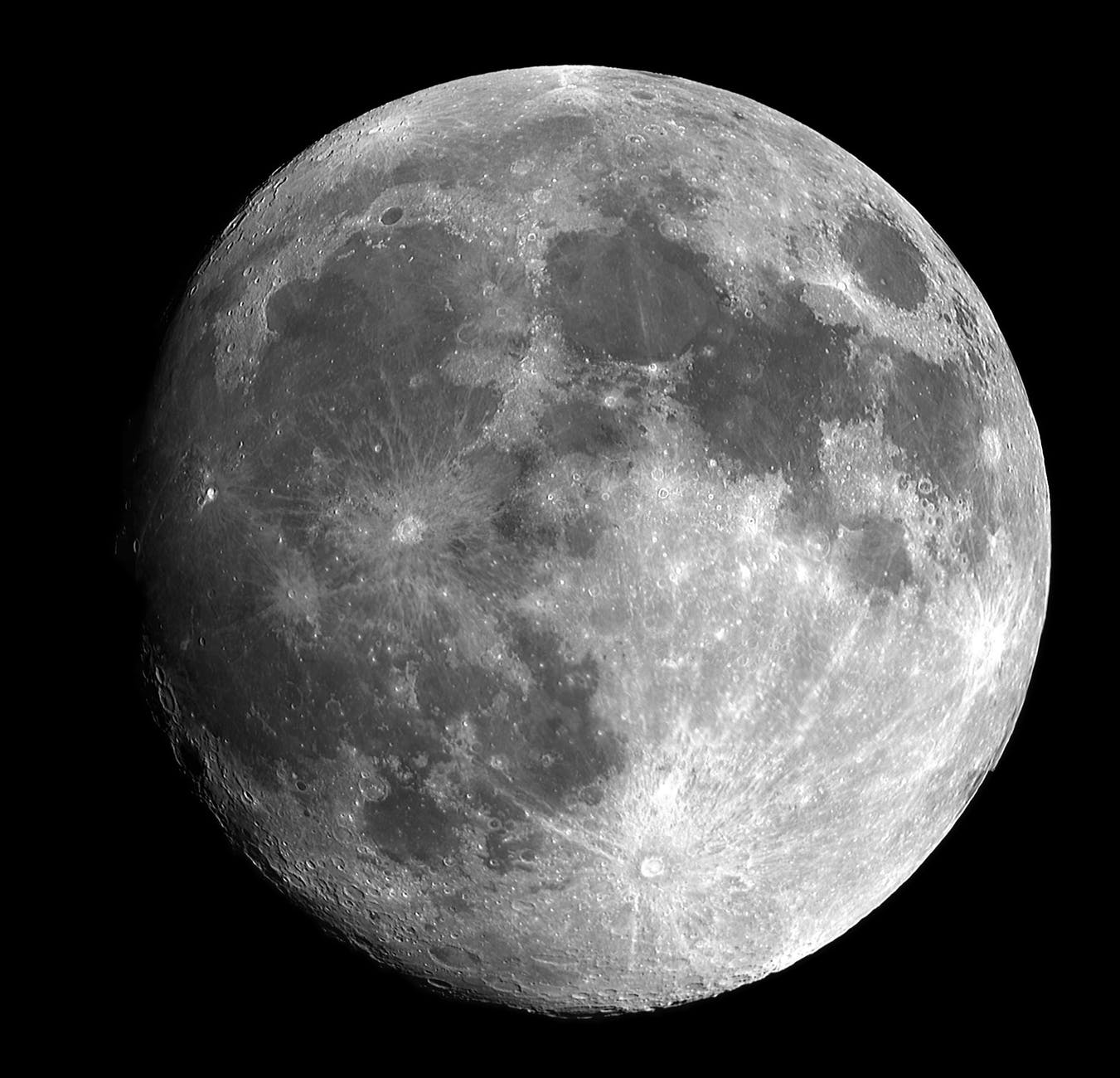
    sky space moon astronomy
    Our closest neighbor in the sky.  Photo by Pixabay on Pexels.com

And a few interesting facts:

  • Humans have attempted to track the phases of the moon for at least 13,000 years, based on an eagle bone artifact found in France that appears to have been used as a counting stick.
  • The oldest known map of the moon was found carved into a rock in a prehistoric tomb in Knowth, County Meath, in Ireland.  It is estimated to be about 5000 years old.
  • A full day on the moon, from one sunrise to the next, lasts an average of twenty-nine Earth days.
  • Common cell phones today are 400 times more powerful than the computers used to guide humans to the moon in the 1960s and 70s.
  • There is an Outer Space Treaty in affect that gives the moon the same jurisdiction as international waters.  The treaty allows the moon to be used for peaceful purposes by all nations, and prohibits military bases and weapons of mass destruction from being placed on the moon.

For more interesting facts about the moon, you can find plenty of resources such as this one.