All posts by Amy Caudill

Unknown's avatar

About Amy Caudill

I am a a writer and dreamer of different worlds, who dabbles in paranormal and science fiction, a fan girl at heart who loves books and movies in equal measure. Join me as I explore and sample some of the best in media available as well as some original writing.

How to Draw Them In: Maintaining a Close Relationship with Grown Children

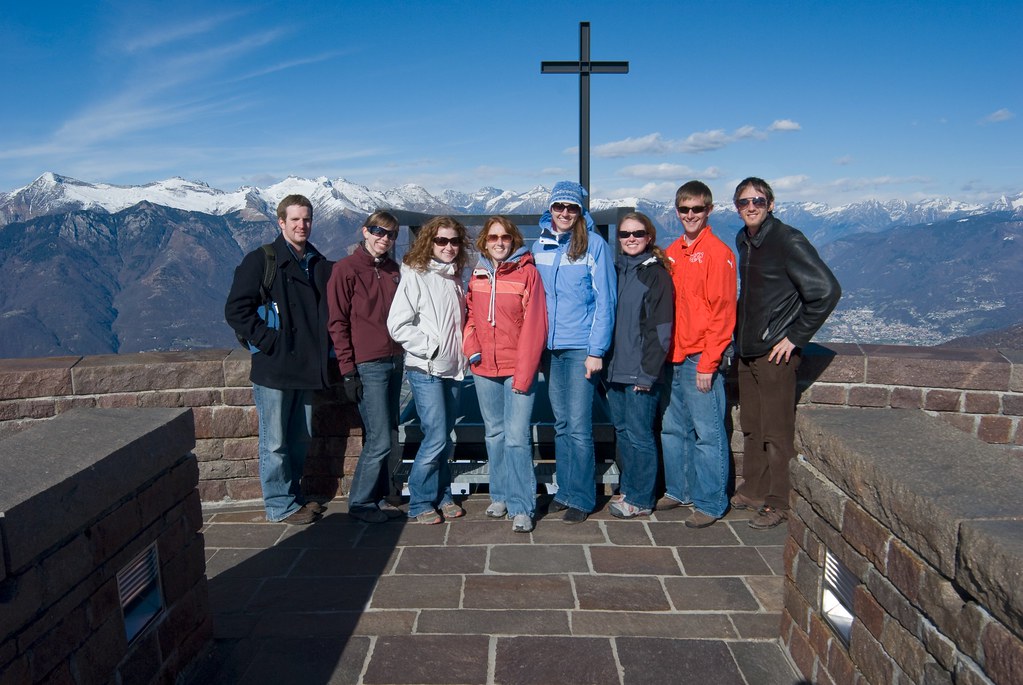
Group

Photo credit: Luke Stearns via Foter.com / CC BY-NC-ND

We all know how important it is to spend quality time as a family.  Time spent bonding with children is vital to helping foster a close relationship between parents, children, and siblings. No one can deny there are emotional benefits to all members involved, but how do we keep those bonds in place as children grow up and start their own independent lives?

As much as parents might dread it, kids do have to grow up; they will go to college, move out of the house, and begin lives of their own that are separate from those of the family unit.  Thought they hopefully will continue to visit or call, eventually they will have another home and that will be the center of their focus.  This is where the original family unit either must evolve, or wither.  Parents must be willing to embark on a new type of relationship with their adult children.

Accept their independence.

Parents cannot stop their children from growing up; they must choose to accept their independence or risk permanent damage to their relationships.  The rules must change; for one the parents will no longer be in charge of all the decisions.  Adult children need to feel respected as that-adults.  Adult children will want and need to be able to make their own choices.

Parents must learn to allow adult children to make those choices, as well as some inevitable mistakes.  The time for protecting them from the whole world is over, and though it is hard to let go, the “kids” will appreciate that the decisions they make are truly their own. That doesn’t necessarily mean they won’t accept advice, as long as the parents offer it without trying to control every situation.    If the parents are lucky, the kids may even realize the adults are wiser than they believed during their teenage years.

Give major decisions a voice.

Whenever a decision must be made for the family as a whole, involve adult children in the decision making process.  Whether the issue is a shared family vacation or choosing healthcare options for an elderly member who is incapacitated, the younger adults will appreciate having their opinions heard.  Perhaps they will contribute an idea or argument that older members of the family haven’t considered.  Sharing concerns, and decisions, as a family of adults, will allow those relationships to continue and be strengthened.

Cultivate shared interests.

One of the easiest ways to stay close to adult children is to spend time pleasurable time together.  The activities the family used for “quality time” when children were young may or may not still be appropriate once everyone is considered an adult, so find activities and passions that can be shared now.  Do parents and adult children share a mutual love for certain activities like hiking, working puzzles, cooking or reading?  Find things that everyone can enjoy, either for the entire group or smaller sub-groups, and make time to do those things together.

If regular meetings are difficult to schedule, at least find time to talk about hobbies or joint interests, be it over dinner once a week or a skype call.   If adult children live too far away to visit regularly make the most of the time you have.  Also, consider rotating who hosts the group for family dinners, get-togethers, and weekend trips.

Remember, maintaining a deep family relationship requires work, but is always worthwhile.

Amy

Amy Caudill’s Reviews > Real Murders

Real Murders by Charlaine Harris
Real Murders (Aurora Teagarden #1) 
by Charlaine Harris (Goodreads Author)

50275498

Amy Caudill‘s review

Aurora “Roe” Teagarden lives a seemingly ordinary small-town life. Beneath her pleasant appearance and demeanor, though, she harbors Nancy Drew-like instincts and a nose for trouble.
Roe possesses a passion for real-crime stories, which she shares with a small local club called Real Murders. The group meets regularly to discuss historical murders- the weapons, the suspects, the victims, the motives- and dissect every detail, sometimes sharing an original theory or two. So naturally, when one of their own is found dead at the meeting hall, it doesn’t take long to recognize the act as an imitation of another crime, or wonder which of them could have something to hide.
This was the first of Charlaine Harris’ books that I’ve read, and I enjoyed it very much. The plot proceeded in a organic fashion, and seemed to grow so that the smallest seemingly insignificant detail was shown to hold meaning by the end of the book.
I decided to also watch the Hallmark movie channel movie based on this book, and thought the contrast between book and cable-ready movie was fascinating. Naturally there were changes, most of which seemed to be “taming down” the book’s action to a more family friendly episode, as the villains in the novel were far more insidious than those presented on the small screen.
I would recommend this book to anyone who enjoys a good mystery, or simply anyone enamored by a strong, independent heroine.

Be Actively Positive


There is still much that is good in this world; it may not be readily apparent at times, in fact it may be downright obscure or completely hidden.  Truthfully there is much to be pessimistic about today-one simply needs to check out the news to see stories about recent natural disasters, not to mention ongoing terrorism, war, politics and the economy.

Most of us have probably met someone who seems to radiate negativity with every breath they take; who drains all the joy from a room just by entering. Being forced to spend much time around such an unhappy person can have adverse effects on the emotional and even physical health of their audience.

What we desperately need to retain our outlook, our optimism, and our sanity, is to seek out that which is positive around us.  By looking around for this hidden gold we can find reasons to be happy even through the most depressing or worrisome events:

  • While life will never be perfect or free from stress or strife, we can be thankful for all the simple things in our life; if we wake up in the morning in a secure home, with a comfortable bed, and have food available to eat, we have found something positive in our day.
  • Each day we get to spend with loved ones, be they family by blood or choice, or close friends, we are experiencing a positive event.
  • Whenever we are privileged to see the power of nature, such as the amazing eclipse many of us recently witnessed, that is another positive.
  • Whenever we get the chance to witness or participate in kindness shared with others, such as volunteering or charity for those in need, it is a positive thing.
  • Whenever we or someone we care for is found to be healthy or recovering from a devastating injury or illness, it is a very big positive in our day.
  • Every day that we can in some way enhance, enrich, or create joy in the lives of those around us, is definitely a positive accomplishment.

All of these positive things together may not always balance out the negative that we face, but they do make a difference; they give us reason to hold on and hope for the future.  Sometimes all we can do is hold on to the positives, so that all the negativity and pain and hatred do not overwhelm us.  By actively seeking out the positives in our day, we can refresh the spirit of optimism, both in ourselves and in those around us.

Here’s to filling our lives with positive thoughts, and turning those into positive actions.

Amy

Hurricane Harvey – How You Can Help

My heart goes out to all those still in need after the destruction caused by Hurricane Harvey. Fellow blogger Nicholas Rossis shared this post about those willing to help and links to groups taking legitimate donations of aid.

Nicholas C. Rossis's avatarNicholas C. Rossis

Hurricane | From the blog of Nicholas C. Rossis, author of science fiction, the Pearseus epic fantasy series and children's books Image: http://www.alexstemmer.com via GraphicStock

Deborah Carney of BookGoodies often shares on their newsletters some of the best news and tidbits you’ve read on this blog. Back in 2012, she lost everything in Hurricane Sandy. This taught her a lot about how organizations and the government don’t help the way you think they will. So, Hurricane Harvey now prompted her to compile and share a list of organizations that are dedicated to helping people directly affected. They are “boots on the ground” and not tying your donations up in administrative costs and funding things that don’t really help.

For her, a group of people created a campaign similar to what GoFundMe is now and people all over the world sent money directly through PayPal. She used that money to rent a car and go out once the roads were open, to get supplies and even simply to get a fast food…

View original post 607 more words

Our Zombies, Ourselves: An Undead Reading List

As school children, department stores, and garden centers make preparations for the season ahead, our thoughts turn to cooler evenings and falling leaves. This coming season always inspires me to indulge in my love of horror characters, including those undead antagonists,zombies. To learn more about these frightful fantasies, check out this post by Longreads author Erin Blakemore.

Erin Blakemore's avatarLongreads

When you think of zombies, it’s likely you envision something like the flesh-eating, immortal creatures created by George Romero, who defined a new genre of horror with Night of the Living Dead and Dawn of the Dead. Thanks to Romero, who died this week at the age of 77, the zombie movie has become more than a chance to feel scared. It’s also an essential lens through which we can view pop culture, politics, and society. In honor of the great director, here is some our favorite writing about the terror of the living dead.

1.“Why Black Heroes Make Zombie Stories More Interesting,” by Matt Thompson (NPR Code Switch, October 2013)

One of Romero’s most famous narrative coups was casting a black actor as the hero of his 1968 film, Night of the Living Dead. It was a decision that turned a run-of-the-mill horror movie into a…

View original post 1,106 more words

Alien Invaders, Mutant Sharks and Ghost Encounters: Why We Can’t Get Enough

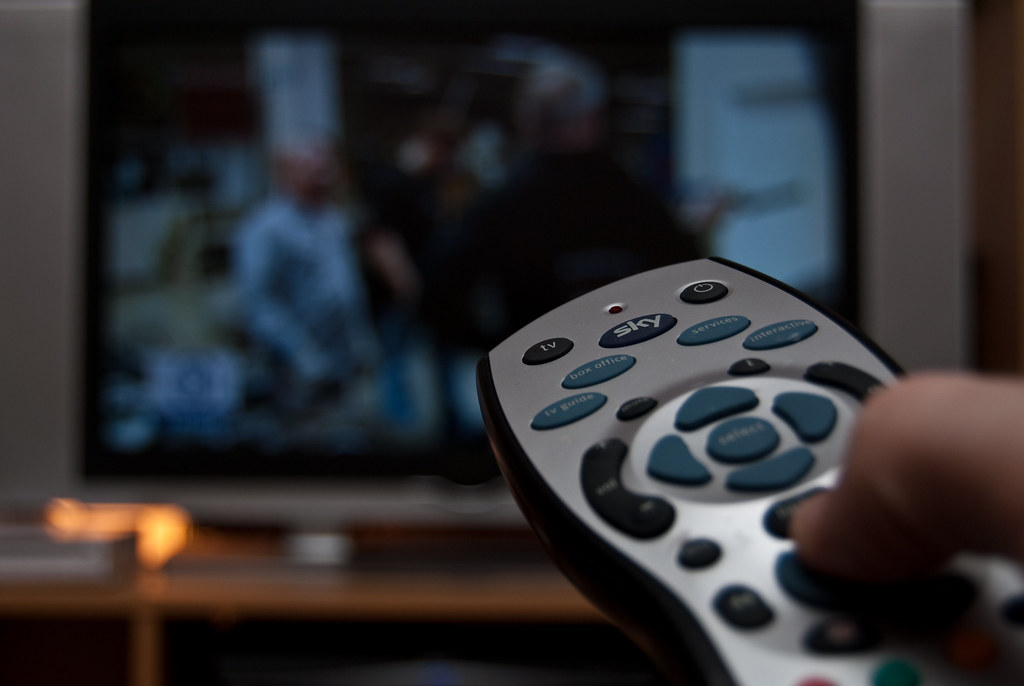
It’s late at night or an unexpected day off.  We have a million things we should be doing, or we should simply be catching up on sleep.  Instead, we’re flipping through the channel guide and tuning in to something we can’t actually believe, and not sure we want to admit, to wanting to watch.  It has aliens, ghosts, sharks, zombies, or maybe just a natural disaster escalated by toxic waste.

Even as we settle in, we’re perhaps questioning ourselves why are we watching this?  Surely we could find a better use of our time, or even a just a better show.  The answer is simple: this special brand of brain candy fills needs we can’t easily do so elsewhere.

Day 90 - Couch Potato
EntPhoto credit: DaGoaty via Foter.com / CC BYer a caption

The need to recapture our lost childhood.

When we tune in to a mindless melodrama or a mockumentary about the paranormal or science fiction we are simply getting reacquainted with the people who once loved sitting around a campfire telling ghost stories, or doing the same with a best friend under the sheets with a flashlight.  We are remembering that sense of wonder we once possessed, that innocence we had, when the world was a magical place that we couldn’t wait to explore and experience.

That part of us still lives on, but is sometimes starved for attention by the needs and responsibilities of adult life.  We need to take time for the part of our minds and hearts that still dreams, and optimistically hopes to find a lost castle or pirate ship hidden in the woods behind our homes.  We crave to cultivate that sense of fantasy, and if a favorite television show or movie or book can help that along, we can make time for it.

The need for sheer escapism.

Along with the need to recapture our youth sometimes we just need to lose ourselves in another world, or another life.  We can imagine ourselves exploring alien landscapes, facing a radiation-fed super predator in the Amazon, or finding the key to a haunted house that hides a treasure.

We can indulge in sheer fantasy for a time to alleviate stress, boredom, or simply imagine ourselves as different people, in a world outside the mundane.  Experts tell us that fantasizing can actually be good for us ;that as long as we don’t try to substitute fantasy for reality in our actual lives, that “escaping” can help us to be more creative, more productive, and happier people.

The need of vicarious thrills.

It’s okay for fictional characters to experience any kind of horror as long as we can watch from the security of our couches or beds.  We know in our hearts what we’re seeing is not real, but we get an adrenalin kick just the same from allowing ourselves to live in the moment.  There is a special kind of thrill that comes from watching something bad happen to someone on the screen, and knowing in the back of our minds that though we may jump when the villain pops out and scream our heads off, that he can’t really touch us.

We watch as hapless victims are turned into test subjects or eaten alive by zombies or possessed by ghosts and are glad it’s not us.  We imagine ourselves confronted by the terrors and dangers that the heroes of the small screen face in such shows as Paranormal Encounters, or Sharknado 1-5, and suddenly our own lives don’t seem bad at all.  We feel more alive, more secure, and more content with our own lives knowing that we’ve witnessed these experiences but will not have to live them.

So the next time you find yourself with a little down time, don’t feel guilty for indulging in your favorite show.  Remember, watching may actually be good for you.

Amy


Blade Runner, American movie (1982)

Han Solo became a true movie star when I was a little girl. From Han Solo to Indiana Jones there seemed to be no heroic deed he couldn’t perform. Now, in following the current trend of revisiting past successes, a sequel to the science fiction classic Blade Runner is coming out this fall, where Harrison Ford will once again grace the screen. For those who have never seen the original, Raistlin0903 gives a very comprehensive summary.

raistlin0903's avatarRaistlin0903

Harrison Ford almost seems to be on a farewell tour, in which he reprises all of his most famous roles one more time. Two years ago he played Han Solo in the seventh installment of the famous Star Wars franchise, and three years from now he will be playing the role of Indiana Jones one final time. But all eyes are on him this year, as he will be making an appearance in the sequel to the classic science fiction movie Blade Runner. One has to wonder if making a sequel to what was obviously a landmark in science fiction history really is the best idea. Still having seen the first few trailers of the new movie, and the director of the film being Denis Villeneuve, I am cautiously optimistic for it. It is ofcourse a good thing that Harrison himself is also featured in this new one. We will…

View original post 722 more words

Dynamics of a “Super” Family

It’s hard to turn around right now without seeing another ad for the next ultimate battle between bands of costumed superheroes and their legions of foes.  With several “ultimate battle” superhero movies playing currently or coming to theatres in the near future, it makes me wonder how such a group would actually function.  Would they fall into stereotypes for an actual family?  I decided to examine one such group in terms of family dynamics.

Guardians of the Galaxy Vol. 2 Cast: Three Things to Know About Karen Gillan’s Nebula

http://www.newsweek.com/review-guardians-galaxy-vol-2-sequel-chris-pratt-zoe-saldana-marvel-589660

The team known as The Guardians of the Galaxy has appeared in two separate movies detailing their origins and exploits, and is slotted to be a part of the upcoming Avengers: Infinity Wars.  If these heroes were an actual family, we would have to call them dysfunctional.  They are drawn together out of necessity and mutual goals, but spend a great deal of time, especially in the first feature, arguing amongst themselves.  Only towards the end of the first film do they begin to resemble a team in function, much less a family.  Only as the first movie ends and the second begins, do we begin to see their clearly defined roles in the unit.

The Patriarch

This role is that of leader, not necessarily but sometimes the father-figure, and is certainly not someone who is infallible.  For all the humanity and flaws this character possesses, it is someone that the rest of the team/family can look up to for guidance and moral support.  For this family the role of patriarch is taken on by Peter Quill.

Peter is, by the end of the first Guardians movie, the undisputed leader who is tasked with deciding the direction the entire team will take going forward.  Like a wise leader, he relies on input and support from the rest of his family, but accepts ultimate responsibility for their safety and happiness.

The Matriarch

The female leader of the family may or may not be the mother of a group, but she takes on a role of protection and support, especially for younger family members.  In this family, the only candidate for matriarch is Gamora, who may or may not develop a relationship with the patriarch in her ongoing role.

Gamora from the beginning encourages the others to make the moral choice in destroying the Infinity Stone, and though she has an adversarial relationship with most of the others in the beginning, is drawn to care for each of the others.  She calls Peter on his stubbornness, Rocket on his bad manners, and Drax on his impulsiveness.  She provides the glue that slowly draws the group together.

Rival Siblings

Never in a family will every member always get along with each other.  There will always be one or more, especially siblings, who sometimes make bad decisions and cause conflict amid the group.  In the first movie, Drax impulsively tries to take on an army by himself, nearly resulting in the death of his family.  The issue is resolved though, after a lot of yelling and pointed orders to “not do that again.”

In the second movie, Rocket, in a move rooted in his inner turmoil over his existence (i.e. teen angst), manages to anger the entire rest of the group with his behavior.  In the end though, he realizes he does have a family and joins them in a bid to save themselves as well as the entire universe from the insane Ego.

Crazy Uncle

Every family needs an elder who, though not part of the core family, is integral to the wellbeing of the group.  Yondu is antagonistic towards the Guardians on principal, but despite the fact that he kidnapped the young Peter actually became a father figure to him.  While Peter stands between him and profit, Yondu cannot help but aid the younger main and his fledgling family when they are in danger. Guardians of the Galaxy Vol 2 casthttp://www.digitalspy.com/movies/guardians-of-the-galaxy/news/a829430/guardians-of-the-galaxy-vol-3-plot-depends-avengers-infinity-war-ending/

In the second movie, Yondu turns his back on his associates and organization of the Ravagers to more fully accept his role in the team dynamic of the Guardians.  He allies with them, partially out of selfish interests, but more so to save Peter’s life.

The Baby

The youngest member of the family is inevitably protected, if not outright spoiled, by the rest of the family.  This person is sometimes overlooked by the group when matters turn serious, and may have to fight to make their value known.  The “baby” of this family of course, is Groot.  His limited vocabulary notwithstanding, he is sometimes underestimated by the others for his simple nature.  However, he proves himself multiple times when it matters most, such as when he becomes a shield to save the others in the first movie.Guardians of the Galaxy Vol. 2 - Baby Groothttp://www.newsweek.com/review-guardians-galaxy-vol-2-sequel-chris-pratt-zoe-saldana-marvel-589660


In the second movie, he is still growing out of the effects of that incident, but despite his much smaller stature, is hardly incapable.  Despite his small stature and childlike behavior, he proves to be invaluable in getting into places beyond the reach of the rest of his family.

The main role of the family is to care about each other, to protect each other when possible, and to spend time together.  So The Guardians of the Galaxy, while they may not be the ideal family, do prove themselves to be one.

Hope you and yours enjoy the next feature film, and I’ll see you soon.

Amy


You’re here for the science, I’m here for the fiction

A fellow blogger shares his thoughts on critics who try to impose too much “scientific accuracy” on popular movies.

Andrew Rainaldi's avatarPop Cultural Studies

Whatever happened to suspension of disbelief? Every time I load YouTube, I see that there’s a new video from the Nerdist explaining the science behind science fiction and fantasy films and TV shows. CinemaSins, best known for their “Everything Wrong With” series, does comedic criticism of movies which focuses on the quality of movies while also touching on stuff like continuity, but frequently gets overly fixated on various minutia that really don’t seem to matter. If an action hero jumps out of a window and lands unscathed in such a way that might break a bone for a normal person, CinemaSins sees this as a “sin.”

Science Fiction 1

Don’t get me wrong, I appreciate scientifically accurate films. I think it’s great when people can get involved in movies like Interstellar because of their scientific accuracy. And if films, like Interstellar, want to do their scientific research to create a fictional world grounded…

View original post 583 more words

Amy Caudill’s Reviews > Bones of the Lost Bones of the Lost by Kathy Reichs

Bones of  the Lost by Kathy Reichs

Bones of the Lost (Temperance Brennan #16) 
by Kathy Reichs (Goodreads Author)

50275498

Amy Caudill‘s review
Jul 25, 2017  
Kathy Reichs is not a paranormal writer, but the dead speak to her anyway. Both Reichs, and her main character, Dr. Temperance Brennan, are forensic anthropologists who examine the remains of unexplained deaths and allow the bones of these bodies to tell their story.
In the 16th installment of Reichs’ series, Bones of the Lost, Brennan is assigned to examine the remnants of a set of mummified dogs that have been smuggled from Peru, and sent to the Charlotte-Mecklenberg coroner’s office in North Carolina for examination and confirmation. At the same time, the remains of a young, unidentified hit-and-run victim are brought in. Little does Brennan expect at the time, but these two cases will prove to be linked in a story that takes her from North Carolina to Afghanistan and back.
Brennan becomes the victim of a vicious, mysterious attacker as she uncovers evidence of murder, prostitution, and human trafficking. She faces danger head on, with the support of Detective Slidell, and her ex-husband Pete, who may or may not be interested in competing for her affections against off-again ex-lover Ryan.
Brennan is deeply passionate about both the victims she examines and those she may be able to help prevent landing on her morgue table. Reichs’ story touches a number of current social issues, from the war and gender discrimination in Afghanistan, to the rise in human trafficking, complete with relevant data and figures. Reichs’ true-life experiences with the subject matter show vividly in this compelling story that was difficult to put down until I’d reached the end.